6 Tips to Help You Read Your Dog While Mantrailing
6 Tips to Help You Read Your Dog While Mantrailing
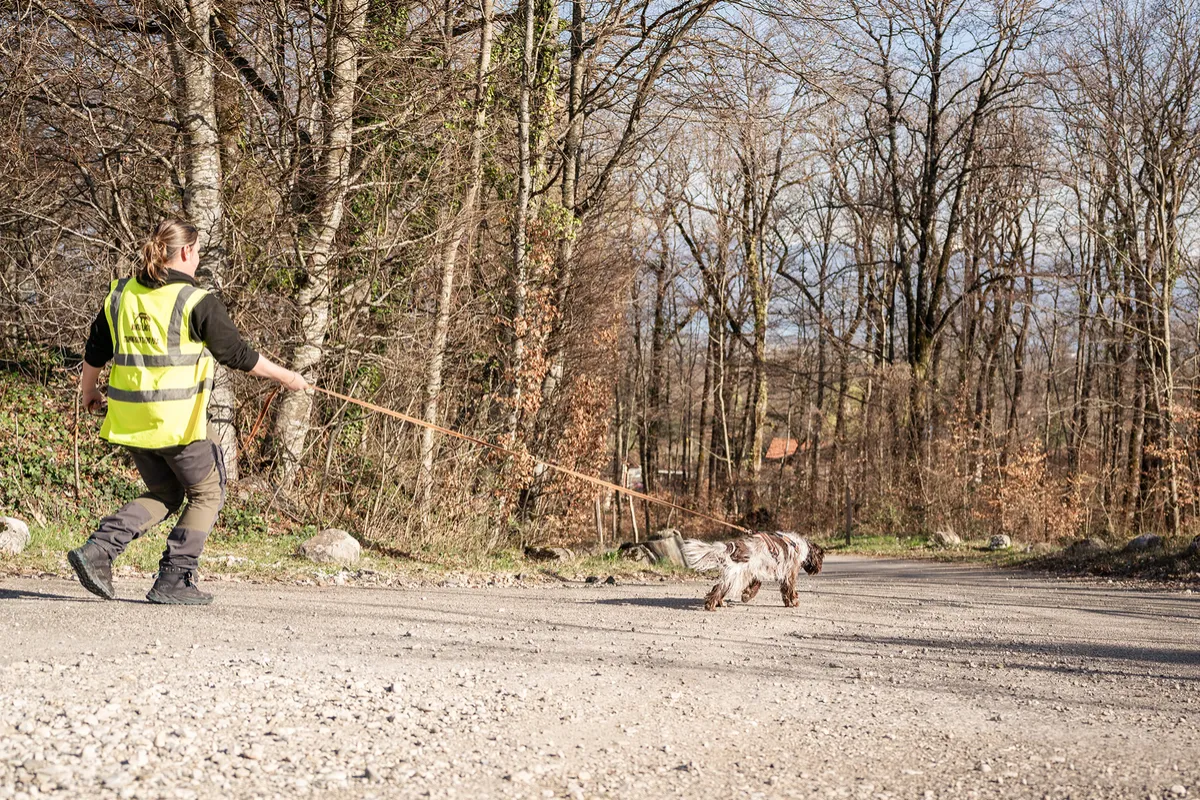
In Mantrailing, it's the dogs job to read the scent and the handlers job to read the dog.
Dogs already know how to use their noses. Our job as handlers is learning to recognise:
when they’re on the trail
when they've lost the trail
when they're searching for the trail
And that’s easier said than done.
Because while trailing, handlers are often trying to also manage the line, avoid tripping over tree roots, watching the environment, listening to their instructor and some how still try to observe subtle body language changes at the same time.
So if you sometimes feel like you’re missing things on the trail, you’re definitely not alone.
Reading Your Dog Is A Skill That Develops Over Time
Every dog communicates differently while trailing.
Some dogs become incredibly intense and obvious when they’re in scent, while others work much more subtly. The more time you spend observing your dog, the more patterns you’ll start noticing in their movement, posture, speed, breathing, tail carriage and line pressure.
And eventually, you begin recognising those tiny changes before your dog even reaches a decision point.
Here are some ways to improve those observation skills and become more connected as a trailing team.
1. Record Your Trails Whenever Possible
Watching your trail back afterwards can be incredibly valuable.
In the moment, handlers are often so focused on physically managing the trail that they miss important details in their dogs body language. Video allows you to slow everything down and spot:
subtle body language shifts
changes in confidence
moments of hesitation
line handling mistakes
environmental influences
Sometimes you’ll also notice things you didn’t even realise you were doing as a handler.
Chest-mounted cameras can work brilliantly, but having someone film you and your dog is often even more useful because you can analyse both the dog and your own handling together.
2. Don’t Forget the Foundations
It’s really easy to get caught up wanting to set more difficult trails.
Especially when you’ve got a smart or highly driven dog who seems ready for bigger challenges.
But some of the best learning often happens when you go back to basics.
Simple trails with high motivation allow you to:
observe behaviour more clearly
reinforce confidence
improve handling
focus on communication rather than difficulty
And honestly, sometimes slowing things down helps handlers learn far more about their dog than constantly increasing complexity.
3. Improve Your Line Handling
Good line handling makes a huge difference when it comes to reading your dog properly.
It's the communication tool between you and your dog.
If the line is constantly tight, jerky or inconsistent, it becomes much harder to feel subtle changes coming from the dog. Smooth handling allows information to travel naturally through the line, helping handlers notice things like hesitation, directional commitment, confidence changes and intensity shifts.
The better your line handling becomes, the easier it is to stay connected to your dog during the trail.
4. Change Your Environment
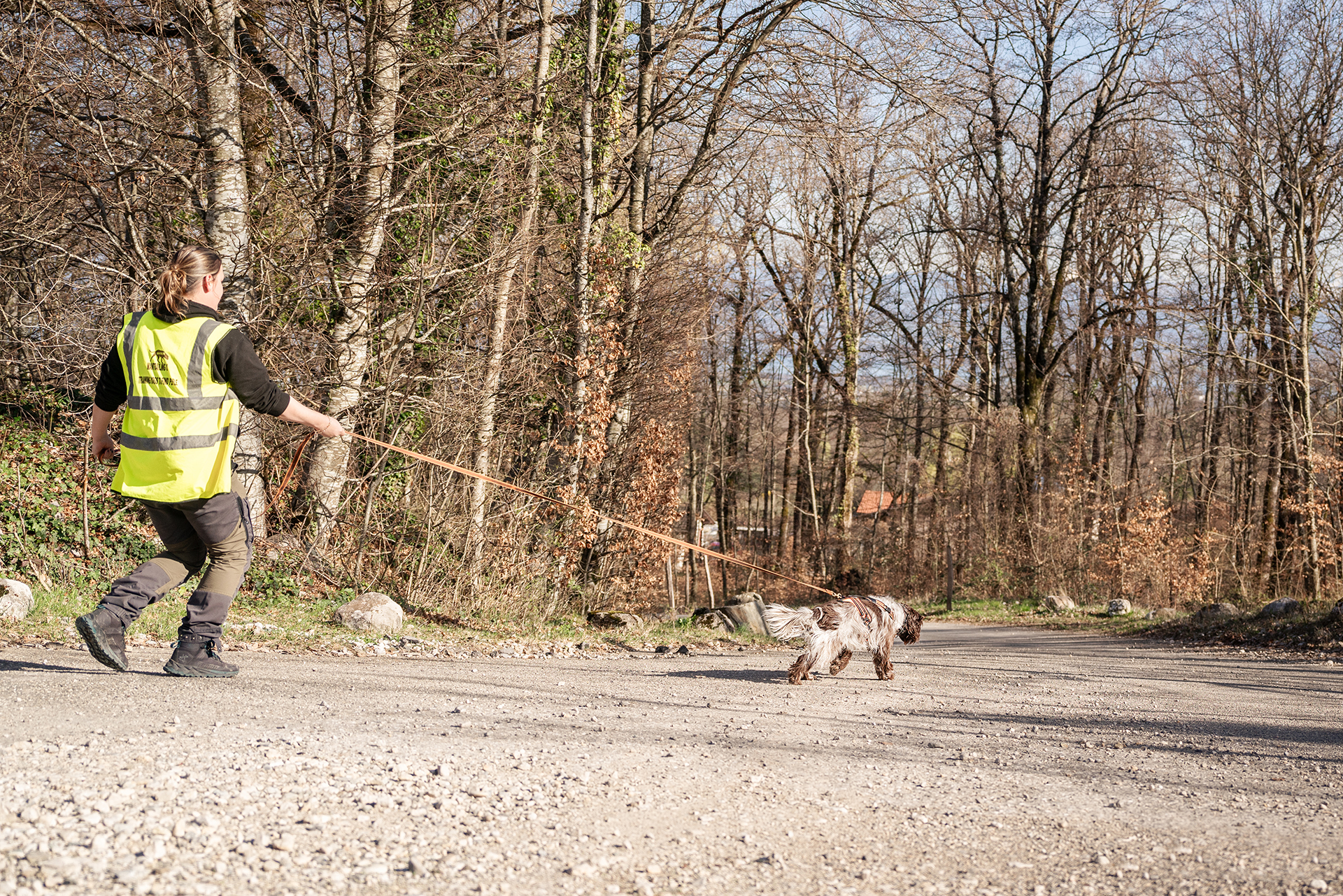
Dogs often behave differently depending on the environment they’re working in.
A dog who looks incredibly confident in a quiet rural location may suddenly work very differently somewhere like a busy urban space, an open field, woodland or industrial areas.
Trying new locations helps you see how your dog adapts to different scent pictures and environmental pressures.
It can also be hugely beneficial to train with different instructors occasionally. Fresh eyes often notice handling patterns or behavioural changes you may have overlooked yourself.
5. Use Blueline Trails To Learn
A Blueline trail means the handler and instructor bother know where the trail was laid.
Some people think this makes the trail 'easier', but actually it can be one of the best learning opportunities for handlers.
Because when you already know the route, you’re free to focus entirely on observing your dog instead of worrying about navigation.
This allows you to study things such as decision points, scent changes, environmental changes, surface transitions and problem-solving behaviour.
And over time, those observations help build a much clearer understanding of how your individual dog works scent.
6. Keep a Behaviour Log
Every dog develops their own unique trailing style.
Keeping notes after each session helps you identify patterns in your dog’s behaviour and progress over time. This doesn’t need to be complicated.
Simply recording things like:
locations
distractions
environmental conditions
surfaces
exercise type
observations
…can help you start recognising recurring behaviours linked to Mantrailing.
Looking back through old notes later can be surprisingly eye-opening.
Learning To Read Your Dog Changes Everything
Reading your dog in Mantrailing takes time.
There’s no magic shortcut because every dog communicates differently. But the more experience you gain, the more those tiny behavioural changes start standing out.
And once you begin truly understanding how your dog works scent, trailing becomes a genuine conversation between dog and handler.
That’s one of the things that makes Mantrailing so addictive.
If you'd like to try Mantrailing with your small dog, you can find your nearest accredited Mantrailing Global Instructor, visit Find your local instructor | MantrailingGlobal
Or,
You can learn online with us inside our Online Mantrailing Club.