


Why A Double Blind In Mantrailing Is a Test, Not Training
Double Blinds are an incredibly useful exercise when integrated into a dog and handler’s training at the right time.
But there’s an important difference between using a Double Blind Mantrailing trail to assess your handling skills and using a training set-up to help you develop those skills.
So, let’s take a closer look at why Double Blinds are often best understood as a test rather than training, and how they can fit into your Mantrailing journey.
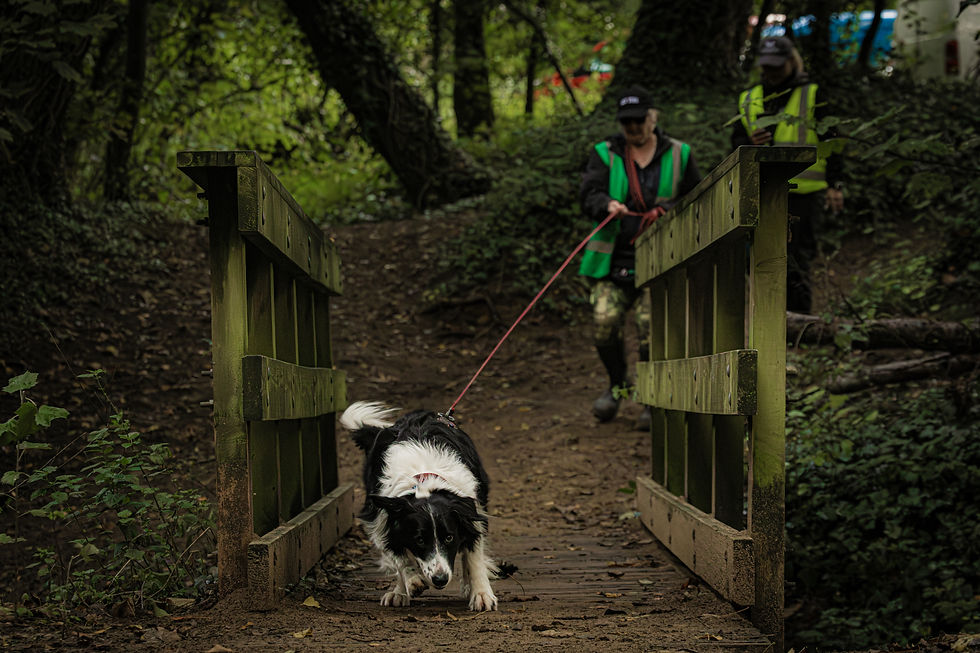
What Is Double Blind In Mantrailing?
A Double Blind trail in Mantrailing is when only the Trail Layer knows where the trail goes. Neither the handler nor the instructor or flanker knows the route. This means the handler needs to work the trail solely through observation of their dog and make decisions without knowing where the Trail Layer has walked.
Unlike a Blue Line trail, where both the handler and instructor know the route, or a Single Blind, where the instructor knows the route but the handler doesn’t, a Double Blind removes all knowledge of the trail route from the entire team.
The dog is working with the scent picture available to them, while the humans are working with what they can observe in real time. This creates an opportunity to see how your and your dog works without the safety net of having someone who knows the route to be able to step in and support if needed.
That’s an important distinction when we’re thinking about training versus testing.
What's the Difference Between Training and Testing?
When we’re training, we’re creating set-ups and scenarios that are designed to help you and your dog learn. We’re building skills, developing understanding and providing opportunities that will help you become a more confident and capable Mantrailing team.
Good Mantrailing training involves considering the individual dog and handler team, the skills they’re developing and the level of challenge/ trail set up that’s appropriate for them.
Testing has a different purpose.
Rather than focusing on developing skills, we’re looking at what the dog and handler can currently demonstrate under particular conditions.
We might be looking at things such as:
How the handler responds to their dog’s behaviour?
Can the handler create and execute a plan?
How does the team manage when the trail doesn’t go as expected?
These observations can help us identify skills that are developing well and areas that may need more work.
Neither training nor testing is inherently better than the other. They simply serve different purposes.
Training helps develop skills, while testing gives us an opportunity to assess them.
Why Double Blinds Aren't Always the Best Training Set-Up
Imagine you’ve been developing your handling skills, learning how to interpret your dog’s behaviour, manage the long line and make decisions without knowing where the Trail Layer has walked.
In a training set-up, an instructor who knows the route can help you reflect on your decisions and provide feedback. But in a Double Blind, that safety net of support is removed.
A properly set-up Single Blind should feel the same to the handler and dog as a Double Blind in terms of not knowing the route. You’d still work without knowing where the Trail Layer has gone, but your instructor would know.
So why not keep that safety net in place, just in case, unless you’re specifically choosing to assess your teamwork under Double Blind conditions?
That way, you can still work independently and test your skills, but can switch over to a training environment where your instructor can support learning if needed.
Should I avoid Double Blind Trails in Mantrailing?
Absolutely Not! But they should be performed occasionally, and at the right time.
Double Blind trails can actually be a valuable part of your Mantrailing development. They can help you identify skills you may need to develop as a handler, give you a different perspective on your current abilities and highlight whether you or your dog might be unknowingly utilising/relying on your instructor’s body language or support.
The important thing is understanding what you’re trying to achieve by doing one...
To test, or to train?

Training Develops Mantrailing Skills. Testing Helps Us Assess Them.
Double Blind Mantrailing has a valuable place in your training.
But it’s important to recognise that testing what you and your dog can do and learning how to do something are two different things.
When we’re training, we want to create opportunities for learning. That means thinking carefully about the set-up, the support available and what we’re trying to achieve.
When we’re testing, we’re looking at the skills that the team can demonstrate under Double Blind conditions.
Both have a place in your Mantrailing journey. The key is knowing why you’re choosing one over the other.
So, the next time you’re planning to do a Double Blind trail, ask yourself: Are my dog and I wanting to learning something, or am I wanting to assess what we’ve already learnt?
Because knowing the difference can help you make more thoughtful training choices.
Love learning about Mantrailing? Join our Online Mantrailing Club for in-depth training, video lessons and on-going support
👉 Learn more here: https://www.mantrailingglobal.com/mantrailing-membership
Want to turn your passion for Mantrailing into a career?
Our Mantrailing Global Instructor Course gives you the knowledge, practical skills and confidence to teach Mantrailing to others.
👉 Discover more here: https://www.mantrailingglobal.com/instructorcourse



Comments